Most breakdowns do not start with a major failure. They generally start with a small hydraulic leak that gets ignored, mud packed into the undercarriage after a long shift, contaminated oil left unchecked, or a loose track chain that slowly damages surrounding components. By the time the machine stops working, the actual problem has often unfolding for weeks.
Industry estimates says that while nearly 70% to 80% of equipment maintenance issues are handled through scheduled servicing, a large share of excavator failures still comes from neglected daily inspections, delayed maintenance routines, and improper machine checks. In Indian construction, quarry, and mining environments where machines operate for long hours in dust-heavy and high-load conditions, these small maintenance gaps fall back on expensive downtime, hydraulic failures, and premature undercarriage wear. That’s why it is incumbent to track the maintenance of excavators segregating into days, weeks and months.
Why Excavator Preventive Maintenance Matters
Prevention is better than cure. Maintenance directly sways excavator productivity, fuel efficiency, operating life, and repair expenses. Machines operating without regular inspections usually experience earlier wear across hydraulic systems, undercarriage components, filters, cooling assemblies, and engine parts.
In mining, quarry, and road construction environments, excavators are exposed to constant vibration, impact loads, abrasive dust, and uneven terrain. Daily inspection routines help operators identify issues early before they develop into expensive failures that affect machine availability and project timelines.
Daily Excavator Inspection Checklist
Daily excavator inspections generally require less than half an hour but can greatly reduce operational failures over time. Most checks are performed before machine startup and after shift completion.
- Engine and Fluid Checks: Check engine oil level before startup, inspect hydraulic fluid condition and level, verify coolant level and radiator cleanliness, inspect fuel lines and tanks for leakage, drain water or sediment from the fuel separator if required.
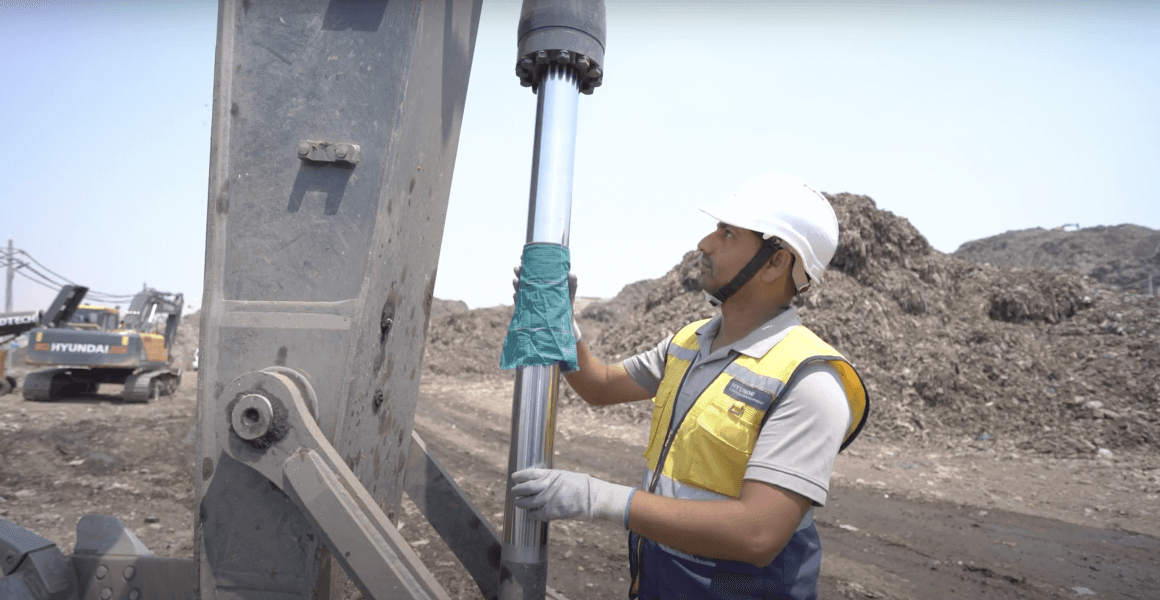
- Hydraulic System Inspection: Inspect hydraulic hoses for cracks or leakage, check cylinder seals for oil seepage, monitor hydraulic response during operation, listen for unusual hydraulic pump noise.
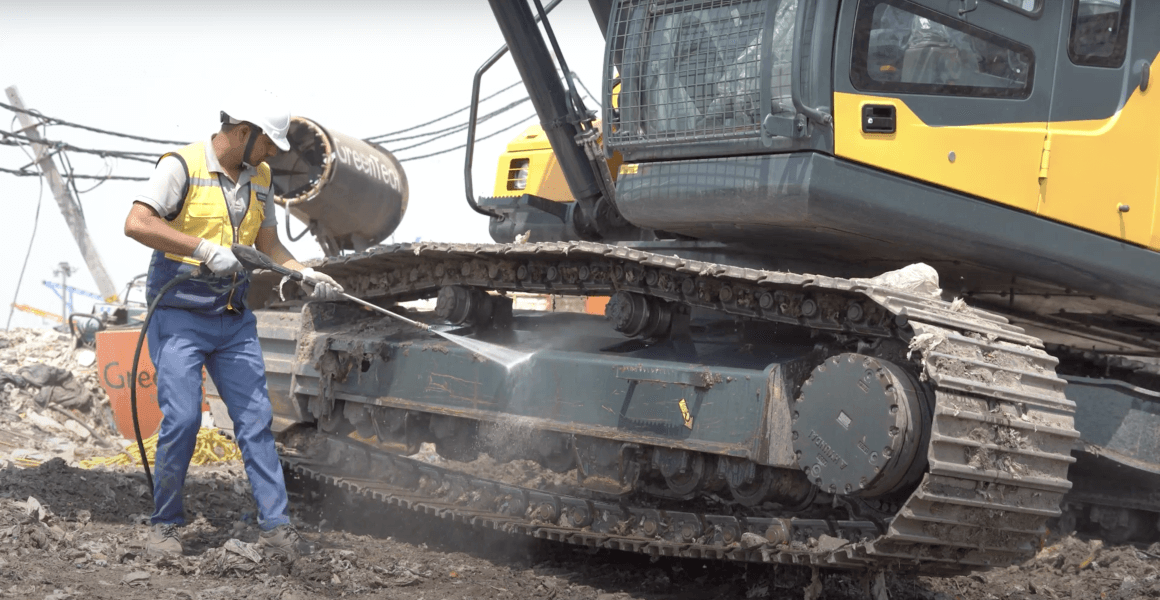
- Undercarriage and Track Inspection: Remove mud, debris, and crushed material from tracks, check track chain tension, inspect rollers, idlers, and sprockets for uneven wear, look for damaged or loose track shoes.
- Electrical and Safety Checks: Test machine lights and warning systems, inspect battery terminals for corrosion, verify display panel readings and alerts, check rear-view camera and mirrors.
- Cabin and Operator Area: Clean cabin floor and controls, check joystick response and operational smoothness, inspect seatbelt condition and operator seating, verify air conditioning and ventilation systems.
Weekly Excavator Maintenance Tasks
Weekly maintenance routines press more on lubrication, wear inspection, and cleaning activities that support smoother machine operation.
Weekly Maintenance Checklist
- Grease boom, arm, bucket, and swing bearing points
- Inspect and clean air filters
- Check fan belt condition and tension
- Tighten loose fasteners and mounting bolts
- Inspect bucket teeth and cutting edges
- Clean radiator and cooling assemblies
- Inspect swing gear area for leakage or abnormal sound
Excavators operating in mining and quarry applications may require more frequent lubrication and cleaning because abrasive dust accelerates wear on moving components.
Monthly Excavator Maintenance Checklist
Monthly inspections involve deeper system checks and replacement of service-related components based on operating hours.
Monthly Maintenance Tasks
- Replace hydraulic filters if required
- Perform excavator engine oil change as per schedule
- Inspect hydraulic oil contamination levels
- Check final drive oil condition
- Inspect structural welds and frame joints
- Evaluate swing motor and travel motor performance
- Inspect cooling hoses and clamps
- Run machine diagnostics and monitoring system checks
Fleet operators managing multiple excavators often schedule these inspections through preventive maintenance programs to decrease unexpected breakdowns during active project phases.
Hydraulic System Maintenance in Excavators
Hydraulic systems handle excavation, lifting, digging, bucket movement, and swing operations. When hydraulic maintenance is ignored, machines gradually lose response speed, lifting performance, and operational smoothness.
Contaminated hydraulic oil, clogged filters, damaged hoses, and overheating place additional pressure on pumps, cylinders, and valves. Operators should regularly monitor:
- Oil contamination
- Slow boom or bucket response
- Hydraulic overheating
- Unusual vibration or sound
- Leakage around hose joints and cylinders
Timely excavator filter replacement and hydraulic fluid inspection can lessen the risk of large hydraulic repair costs later.
A Quick Look at the Preventive Maintenance Task
| Maintenance Area |
Daily Tasks |
Weekly Tasks |
Monthly Tasks |
| Engine System |
Check engine oil level, inspect for leaks |
Inspect fan belt condition |
Perform engine oil replacement |
| Hydraulic System |
Check hydraulic oil level, inspect hoses and seals |
Inspect hydraulic response and fittings |
Replace hydraulic filters, inspect oil contamination |
| Undercarriage |
Remove mud and debris, check track tension |
Inspect rollers, sprockets, and idlers |
Inspect overall wear and alignment |
| Cooling System |
Check coolant level and radiator cleanliness |
Clean radiator fins and cooling assembly |
Inspect cooling hoses and clamps |
| Bucket & Attachments |
Inspect bucket and attachment condition |
Check bucket teeth and cutting edges |
Inspect linkage and structural wear |
| Electrical Components |
Check lights, alarms, and display systems |
Inspect battery terminals and wiring |
Run machine diagnostics |
| Cabin & Safety |
Inspect controls, mirrors, and seatbelt |
Check AC and ventilation system |
Inspect operator safety systems and cabin condition |
Track Chain and Undercarriage Maintenance
Undercarriage systems experience continuous impact from rocks, mud, sand, and debris across Indian excavation sites. Without regular cleaning and inspection, abrasive material accumulates around rollers, links, sprockets, and track chains, accelerating wear. Proper track chain maintenance helps reduce stress on rollers, sprockets, idlers, track links and travel motors.
Loose tracks increase derailment risk, while over-tightened tracks create unnecessary pressure on travel systems and hydraulic motors.
Common Excavator Maintenance Mistakes
Many excavator failures begin with maintenance practices that are repeatedly delayed or ignored during busy project schedules. Common issues include:
- Delayed engine oil replacement
- Ignoring minor hydraulic leakage
- Operating with clogged air filters
- Skipping undercarriage cleaning
- Using incorrect lubricants or fluids
- Running machines with overheated cooling systems
These habits gradually hampers excavator productivity before leading to major component damage and extended downtime.
Conclusion
Excavators working across Indian construction, mining, quarry, and infrastructure projects operate under constant mechanical stress. Machines that receive regular inspections, proper lubrication, hydraulic monitoring, filter replacement, and undercarriage cleaning usually maintain more stable performance over longer operating cycles.
For operators and fleet owners, maintenance routines impacts fuel consumption, machine availability, repair expenses, and the overall productivity of excavation operations. This is also why modern excavators from HD Construction Equipment India are modeled with easier service access, operator-friendly diagnostics, modified hydraulic systems, and maintenance-focused engineering that supports demanding Indian working conditions. Proper maintenance combined with elaborate machine design helps contractors cut downtime and maintain consistent project productivity over the long term.





 WhatsApp
 1800 209 8600
 Find a dealer
 Enquiry